Showing posts with label Cuts. Show all posts

Sunday, October 15, 2017

Below the Cut: Dungeon Explorer II (TurboGrafx-CD)

Dungeon Explorer II - Rating(8 RPP)
1) 2 - Character Advancement: practice/experience based advancement, stat or level increases, multiple classes or characters, customize characters
2) 3 - Combat: character stats used for combat, additional combat options, turn based
3) 0 - Items and Equipment: store to buy and sell, equipment decisions, item decisions
4) 2 - Story: main story at the forefront; world full of hints and lore; descriptions for objects, people, and places
5) 1 - Exploration: open world from the beginning, visited locations remain open
6) 0 - Quests and Puzzles: side quests not related to the main quest, puzzles and riddles to solve

I actually played through the first game before realizing it wasn't quite up to muster as an RPG. Here I'm cutting this one down as there isn't much difference between the two. Rather than repeat myself, go read up on the first game, and the bit I played through.

Sunday, April 16, 2017

Below the Cut: Technoclash (Genesis)

(Source: Wikipedia)
Technoclash - Rating(7 RPP)
1) 1 - Character Advancement: practice/experience based advancement, stat or level increases, multiple classes or characters, customize characters
2) 1 - Combat: character stats used for combat, additional combat options, turn based
3) 2 - Items and Equipment: store to buy and sell, equipment decisions, item decisions
4) 2 - Story: main story at the forefront; world full of hints and lore; descriptions for objects, people, and places
5) 0 - Exploration: open world from the beginning, visited locations remain open
6) 1 - Quests and Puzzles: side quests not related to the main quest, puzzles and riddles to solve

I was eager to see a completely new RPG. On Wikipedia it's listed as an action-RPG, but I failed to find what contributes to that second genre, so it's here on the chopping block. It has less to offer than LandStalker.

There are no character levels, stats, or much of a world to explore. The back of the box purports 7 areas with up to 9 levels each, but it's all progressive levels. I only played through the first two to get a feel for it, but failed to find much in the way of lore, side quests (or a main quest), and no store or currency.

The main character is able to choose a partner for each level, either a warrior type or wizard type. There are a good number of weapons (all requiring ammo) and spells to heal, teleport, levitate, or become invincible for a short time. Ammo is picked up from fallen enemies. Completing some levels requires a tiny bit of puzzle solving.

As for the game overall, it's tough, but taking it slow makes it a bit easier. It's not a good game, at least from what I played, but it isn't the worst either. It compares most easily to Gauntlet, but the level design is a bit more interesting.

Tuesday, January 31, 2017

Below the Cut: LandStalker (Genesis)

(Source: Wikipedia)
LandStalker - Rating(9 RPP)
1) 0 - Character Advancement: practice/experience based advancement, stat or level increases, multiple classes or characters, customize characters
2) 0 - Combat: character stats used for combat, additional combat options, turn based
3) 0 - Items and Equipment: store to buy and sell, equipment decisions, item decisions
4) 0 - Story: main story at the forefront; world full of hints and lore; descriptions for objects, people, and places
5) 0 - Exploration: open world from the beginning, visited locations remain open
6) 0 - Quests and Puzzles: side quests not related to the main quest, puzzles and riddles to solve

Ever since I played Solstice I've had a soft side for the isometric perspective. It took years of playing to get comfortable enough with the controls to make it through the game. Luckily I had Nintendo Power to guide me through those early NES games. I'm not sure I would have beaten as many as I did without it. My exposure to Genesis games was slight, but I'm sure I would have been enamored with this title just the same. I might give it a proper playthrough one day, but it won't be detailed here.

As a 9, it's borderline, but in the end it's an action-adventure with some of the worst isometric controls I've experienced (I haven't played them all, granted). Nigel, the protagonist, can only move in four directions, a normal mechanic in these games. Instead of angling the d-pad to map up to up-right or up-left, it's mapped to both depending on which diagonal direction was last pressed. This makes handling imprecise. Due to that, the action sequences are tedious as I often accidentally flew in the wrong direction or swung my sword to the side of an enemy.

Nigel finds health upgrades, but that's the only stat improvement. (I'm unsure if I should even give a point for that.) Combat strength is determined by equipment alone. There's a good amount of that, and even some situational gear that makes swapping effective for different environmental hazards. Items are varied as well. As for story, setting, and puzzles: that's where the game really shines, but those same aspects are what make it an adventure game, not quite an RPG.

Without a way for the character to improve, the player has to improve to make progress in the game. Combat misses the mark. It's rote with only a sword to manage enemies (and some limited use items). The store is only acts as a money sink with no way to sell anything. I'm actually not sure if there are side quests, but I'll give the game the benefit of the doubt as I haven't played through far enough to find one.

In the end, I enjoyed what little I tried, and if I can manage to look past the control difficulties (and rewire my brain to accommodate), I'll probably enjoy the rest of the game. Until that time let's move on to Inindo.

Monday, January 2, 2017

Below the Cut: Spiritual Warfare (NES, Genesis, Game Boy)

(Source: GameFAQs)
Spiritual Warfare - Rating(7 RPP)
1) 1 - Character Advancement: practice/experience based advancement, stat or level increases, multiple classes or characters, customize characters
2) 1 - Combat: character stats used for combat, additional combat options, turn based
3) 1 - Items and Equipment: store to buy and sell, equipment decisions, item decisions
4) 2 - Story: main story at the forefront; world full of hints and lore; descriptions for objects, people, and places
5) 2 - Exploration: open world from the beginning, visited locations remain open
6) 1 - Quests and Puzzles: side quests not related to the main quest, puzzles and riddles to solve

What better way to engage the video game era children in the bible than slap some bible references on to poorly ripped off Nintendo games? That seemed the train of thought for Wisdom Tree. Spiritual Warfare puts the player into the shoes of the only citizen in town not corrupted by the evils of the world. As a soldier in the lord's army, it's up to the main character to convert the heathens back to the way of the lord by... throwing fruit at them.
(Source: Games Database)

Like the Zelda games, there's a single character with no experience or levels. The only stat increase is health, and from new equipment. There's no real customization. Combat is action based, and since there are no character stats that improve, you're locked into actively aligning and shooting at enemies (with fruit that represent virtuous traits, mind you). There are no stores to sell at, and equipment is merely upgraded. I think there are a variety of items, but I didn't play very far.

I'll give it credit for the story, which is rather unique and includes biblical as well as historical and social references. The game is broken up into scenarios, so there's no way back once a level is completed. There are bible verses to fill in, so I gave it credit for riddles. The ultimate goal is to find the Armor of God, and defeat Satan. I think I've been more than fair with the score, but if anyone has suggestions for adjusting it as always please let me know what I missed in my cursory glance. If you want to read about this and other Wisdom Tree games, then Encyclopedia Obscura is a good source.

Monday, December 12, 2016

Below the Cut: Rolan's Curse II (Game Boy)

(Source: MobyGames)
Rolan's Curse II - Rating( RPP)
1) 0 - Character Advancement: practice/experience based advancement, stat or level increases, multiple classes or characters, customize characters
2) 0 - Combat: character stats used for combat, additional combat options, turn based
3) 0 - Items and Equipment: store to buy and sell, equipment decisions, item decisions
4) 0 - Story: main story at the forefront; world full of hints and lore; descriptions for objects, people, and places
5) 0 - Exploration: open world from the beginning, visited locations remain open
6) 0 - Quests and Puzzles: side quests not related to the main quest, puzzles and riddles to solve

As was true of the first game, this one fails on the basic level of character advancement. Combat stats are dictated by equipment. This sequel adds an inventory of items and additional characters, but does little to introduce a cohesive world. The world is once again broken up into chapters that prevent visiting past areas. Characters have a variety of equipment and magic items. The story is there, but there's little development over the course of the game.

Still, it's a fun little Game Boy game, and handles much better than the first or Ninja Taro. There aren't any quests aside from the main one. It's just not an RPG in any sense of the genre I'd consider. It's not really even much of an adventure game to fit in with other action-adventure titles.

Saturday, October 8, 2016

Below the Cut: Gemfire (NES, SNES, Genesis)

(Source: GameFAQs)
Gemfire - Rating(6 RPP)
1) 2 - Character Advancement: practice/experience based advancement, stat or level increases, multiple classes or characters, customize characters
2) 1 - Combat: character stats used for combat, additional combat options, turn based
3) 0 - Items and Equipment: store to buy and sell, equipment decisions, item decisions
4) 1 - Story: main story at the forefront; world full of hints and lore; descriptions for objects, people, and places
5) 2 - Exploration: open world from the beginning, visited locations remain open
6) 0 - Quests and Puzzles: side quests not related to the main quest, puzzles and riddles to solve

It's well known that D&D has its roots in war gaming. So, it's understandable when a strategy game includes set characters, stats, and improvements that some might tend to call it an RPG. However, these characters are rarely influential to the story. In the case of Gemfire, a small country is at strife. The play selects a family to control as well as a scenario, which dictates how many territories are under the family's control from the start. As with most KOEI games, the player improves each land and conscripts armies to gain more land. The ultimate goal is conquest.

Characters lack advancement options. A land's stats can increase, so I gave it a point for that. Different families have different special units, but there's no customization. Character and land stats don't influence turn based combat as it's the armies that do battle. There's no store, items, or equipment.

The plot doesn't progress during the game. The entire world is rather small; however, it is fully accessible from the beginning. There are no additional quests or puzzles to solve.

It's a fine game, and on the shorter side compared to other KOEI strategy games. We'll have to wait until Dragon Force to get closer to a true strategy-RPG, although Langrisser did well. On paper, strategy games seem to fit neatly in as a hybrid of RPGs; however, there are so very few of them that accomplish full integration. Now, I glossed over a lot of details, and may have missed some aspects as I didn't play it. So, if any of this is misinformation, or there are missing details that might tilt the scale, do speak up.

Tuesday, July 26, 2016

Below the Cut: Tecmo Cup: Soccer Game (NES)

Tecmo Cup: Soccer Game - Rating(2 RPP)
1) 1 - Character Advancement: practice/experience based advancement, stat or level increases, multiple classes or characters, customize characters
2) 1 - Combat: character stats used for combat, additional combat options, turn based
3) 0 - Items and Equipment: store to buy and sell, equipment decisions, item decisions
4) 0 - Story: main story at the forefront; world full of hints and lore; descriptions for objects, people, and places
5) 0 - Exploration: open world from the beginning, visited locations remain open
6) 0 - Quests and Puzzles: side quests not related to the main quest, puzzles and riddles to solve

As far as I can tell, this is even less of an RPG than the RPG mode in Pinball Quest. Sports based role-playing games may have their day, but not today. Even considering the sport itself as combat, this game seems to have very little depth . Offensive options are to dribble, shoot, and pass, and defensive options are to tackle, cut, or wait. Every character has these, some at higher costs than others, but there's no indication that one character is better than another. Stats are invisible, and if they improve, I didn't see it happen.

It's nice to see a sports game with a story, but it's such a light touch that rarely goes beyond "good luck in the next match" or "watch out for Eric, he's a strong player." There's no exploration, quests, or equipment. The turn based shots, blocking, and random encounters on the field with invisible opponents blocking the ball felt like it lacked control over my player's actions, which hurts a sports game. There's a Genesis version that adds a few more details, but the game is basically the same.

For those looking forward to Cosmic Fantasy 2, the posts are delayed as my TurboDuo CD stopped playing music. While I can do without music, this is a sign of bad capacitors that could damage the whole system. I'm waiting on a capacitor kit that once replaced should fix the issue. If it doesn't, then I may move on to Final Fantasy: Mystic Quest until I can find another solution.

Tuesday, July 12, 2016

Below the Cut: Ninja Taro (Game Boy)

(Source: GameFAQs)
Ninja Taro - Rating(7 RPP)
1) 0 - Character Advancement: practice/experience based advancement, stat or level increases, multiple classes or characters, customize characters
2) 0 - Combat: character stats used for combat, additional combat options, turn based
3) 0 - Items and Equipment: store to buy and sell, equipment decisions, item decisions
4) 0 - Story: main story at the forefront; world full of hints and lore; descriptions for objects, people, and places
5) 0 - Exploration: open world from the beginning, visited locations remain open
6) 0 - Quests and Puzzles: side quests not related to the main quest, puzzles and riddles to solve

Rather than bank everything on the next installment of Rolan's Curse, NMK leveraged their Game Boy engine of the first game with their Ninja-kun franchise. Judging by the front cover though, it seems the localization team thought the American audience wouldn't be interested in cutesy ninjas. In kind, Sammy marketed this one as an RPG as well. I'm going to guess that it wasn't well known as it's not even in MobyGames' database. I might add it myself, but dislike having to write up the description.

There are stat increases, but they're found in chests, so no experience or gold. Combat is action based with monsters running around a top-down world map. There is a selection of weapons to choose from, but I couldn't determine if items ever came into play. The story is minimal, but there are towns and NPCs. As for everything else, it's non-existent. I give this a very generous C for effort.

I appreciate what Sammy tried, and as a publisher for games that pushed boundaries I'm glad they took chances like this. However, this and Rolan's Curse definitely fall more into the realm of action-adventure. With Might and Magic done, we actually don't see the name Sammy again until Rolan's Curse 2. No other RPGs were published by them in the US as far as I can tell.

Monday, May 9, 2016

Below the Cut: Ultima: Runes of Virtue I & II (Game Boy)

(Source: MobyGames)
Ultima: Runes of Virtue - Rating(9 RPP)
1) 2 - Character Advancement: practice/experience based advancement, stat or level increases, multiple classes or characters, customize characters
2) 1 - Combat: character stats used for combat, additional combat options, turn based
3) 1 - Items and Equipment: store to buy and sell, equipment decisions, item decisions
4) 2 - Story: main story at the forefront; world full of hints and lore; descriptions for objects, people, and places
5) 2 - Exploration: open world from the beginning, visited locations remain open
6) 1 - Quests and Puzzles: side quests not related to the main quest, puzzles and riddles to solve

Initially I wrote this off as a Zelda clone. Now that I've taken a closer look, it's right on the edge of the scale. There are stats, but in the short time I played I never saw them increase. At the same time, it's not clear if str, dex, or int affect combat. Most enemies die to a single hit. There are four characters to choose as the hero. It's possible to collect money, but not to sell any items.

The most impressive part that I missed was how open the world was. There are a lot of puzzles in the dungeons, and many NPCs to help out with hints. While the game is light on text, it does well to fill out the world with a nice cast of characters familiar to those that have played Ultima. In the end though, I don't think this has enough trappings to fall within the RPG genre, even as an action-RPG.

(Source: MobyGames)
Ultima: Runes of Virtue II - Rating(9 RPP)
1) 2 - Character Advancement: practice/experience based advancement, stat or level increases, multiple classes or characters, customize characters
2) 1 - Combat: character stats used for combat, additional combat options, turn based
3) 1 - Items and Equipment: store to buy and sell, equipment decisions, item decisions
4) 2 - Story: main story at the forefront; world full of hints and lore; descriptions for objects, people, and places
5) 2 - Exploration: open world from the beginning, visited locations remain open
6) 1 - Quests and Puzzles: side quests not related to the main quest, puzzles and riddles to solve

It seemed to either do well enough to garner a sequel (also on the SNES), or the publisher had enough time with the license to pump out a second game. This one started out with a full length intro that described how the evil guy was bored and kidnapped somebody just to annoy Lord British. Again, I'm not sure the characters have any actual development. I'm sure it's possible to increase stats (at least health), but once again combat seems too simple for them to actually matter. I may be wrong about that, and if anyone has more experience with this game to explain how I'm wrong, then I'll revisit both. Even the idea of side quests might be wrong, but none jumped out in the first few minutes of the game.

Unrelated to playing all console RPGs, I've started playing through the Game Boy library as well. Once I play through the entirety of this game I might either post an update with a better description, or create an entirely new post to cover it. It's hard to judge something from the first 10 minutes, and I'd rather not play through all games considered by RPGs from random lists. If time permitted, I probably wouldn't even have a distinction, but as it stands I'm still not making headway on the list.

Friday, April 1, 2016

Below the Cut: The Legend of Zelda: A Link to the Past (SNES)

(Source: MobyGames)
The Legend of Zelda: A Link to the Past - Rating (9 RPP)
1) 1 - Character Advancement: practice/experience based advancement, stat or level increases, multiple classes or characters, customize characters
2) 1 - Combat: character stats used for combat, additional combat options, turn based
3) 1 - Items and Equipment: store to buy and sell, equipment decisions, item decisions
4) 2 - Story: main story at the forefront; world full of hints and lore; descriptions for objects, people, and places
5) 2 - Exploration: open world from the beginning, visited locations remain open
6) 2 - Quests and Puzzles: side quests not related to the main quest, puzzles and riddles to solve

This is my favorite of the series, although I haven't played in a long time. It was one of those games I so eagerly waited to play as a kid that when we did get it I pretended to be sick the next day on the following Monday. This game offers such a polished update that I often wondered why other game series weren't as good.

While the Adventure of Link offered more RPG style play with experience, levels, and stats, A Link to the Past lives up to its name by going back to its roots of equipment upgrades, no character combat stats, and rupees. With such a deep world with side stories and quests, puzzles and riddles, and a world to explore that expands to double its size by the end, it's easy to see why some call it an RPG.

Like I mentioned in my previous article on cutting adventure games, there's a emphasis in Zelda of the player improving, and less of one on the character. Genres lines should divide games based on how the game is played. If the player is expected to actively maneuver the character to gain an advantage, then it shifts towards an action game. On the other hand, if the movement is not active, or if there's no movement in combat at all, then it abstracts it in such a way that the character is more involved in combat than the player. The player only influences actions, and the character stats and situation determine how effective that action is.

Action-RPGs blur the line by giving character stats that improve actions while still relying on the playing to time them. The defining factor here is that the character improves and it becomes less important that the player becomes better at the game. Still, the action elements are present, which is why it's a hybrid or sub-genre.

The best genre definition I've seen, and the most commonly used, for this type of game is action-adventure. Basically, it's an action game, but much of the game has adventure elements where certain items are needed to progress (placing gems in slots, speaking the correct phrase, or merely having the right key). There's an emphasis on inventory or environmental puzzles. More and more games are picking up RPG mechanics by including character upgrades, equipment, and items that add abilities or increase stats. Going forward we'll see more and more edge cases.

So what to do? The scale's first two points separated character advancement through repeated action from stat increases to give extra weight to the first point; the main difference is a feeling of unlimited growth versus predefined upgrades. Of course, most games have a level cap (maybe not all), so it's not completely unlimited, but level caps are rarely reached. Invest a bit more time, and the played can have an easier time by gaining a few more levels. There's a pitfall here; it's sometimes unclear how powerful the character should be at any point. This makes the experience feel a bit more open, rather than having static upgrades that enforce the idea that a designer intended a certain amount of power before moving on.

The Legend of Zelda games have health upgrades in the form of heart containers and heart pieces introduce in this game, but that's the only character stat that increases. Some are hidden, and if the player finds the game difficult there's the option to seek them out. However, attack and defense power are directly linked to Link's equipment. His abilities are dependent on him finding tools or upgrades. Unless a player gets better at a game, or finds a way to get an upgrade early, options are limited when faced with a difficult boss.

In the end, if a game is labeled as an RPG then I expect to have the option to grind, even though I rare choose to do so recently. The scale isn't perfect, I'll be the first to admit it. A game could skew the scale in some way without being an RPG. I've yet to find such a game on console, but it could happen. That'll be an interesting day.

Friday, February 26, 2016

Below the Cut: Ax Battler: A Legend of Golden Axe (Game Gear)

(Source: Wikipedia)
Ax Battler: A Legend of Golden Axe - Rating(5 RPP)
1) 0 - Character Advancement: practice/experience based advancement, stat or level increases, multiple classes or characters, customize characters
2) 0 - Combat: character stats used for combat, additional combat options, turn based
3) 0 - Items and Equipment: store to buy and sell, equipment decisions, item decisions
4) 2 - Story: main story at the forefront; world full of hints and lore; descriptions for objects, people, and places
5) 2 - Exploration: open world from the beginning, visited locations remain open
6) 1 - Quests and Puzzles: side quests not related to the main quest, puzzles and riddles to solve

Ax Battler was compared to Zelda II at its release; however, Zelda II does quite a bit more. First of all, this game has no experience levels. Beyond health, I'm not sure there are any stats to consider. Combat is action based with options limited to attacking and jumping. With the limited scope, I think the game has more in common with Gargoyle's Quest than Zelda. Towns exist, but don't support the usual stores. They're merely hubs for information on the next dungeon to tackle. There are training houses to gain special abilities like high jumping.

The game has a top-down overworld, random side-scrolling battles, and dungeons that include platforming in the same side-scrolling perspective. I'm not fully sure there are side quests, and no puzzles I saw in the first 15 minutes. Exploration is fairly linear, although I marked it as open in case it opens later. As far as I can tell, there aren't any items or equipment decisions, although upgrades exist.

Sunday, January 17, 2016

Below the Cut: Cowboy Kid (NES)

Interesting art direction (Source: Wikipedia)
Cowboy Kid - Rating(5 RPP)
1) 0 - Character Advancement: practice/experience based advancement, stat or level increases, multiple classes or characters, customize characters
2) 0 - Combat: character stats used for combat, additional combat options, turn based
3) 1 - Items and Equipment: store to buy and sell, equipment decisions, item decisions
4) 2 - Story: main story at the forefront; world full of hints and lore; descriptions for objects, people, and places
5) 1 - Exploration: open world from the beginning, visited locations remain open
6) 1 - Quests and Puzzles: side quests not related to the main quest, puzzles and riddles to solve

Welcome to the wild west, where if you have money, health, and stores, you get to call the game an RPG. Simply put, the game hides its levels by placing the duty of sheriff on a new stranger in town, and you select a "quest" to capture a bandit. Put another way, it's a simple action game with no character development, combat based solely on weapons, and even some scrolling-shooter levels. I can only imagine someone was confused by the inventory plus health related items and slightly open world, and decided that was enough to label it as having RPG-elements. This categorization has since been corrected on MobyGames.

The setting is interesting for an RPG, and one that's hardly ever used to my knowledge. It seems a wild west RPG is ripe for the making. The only RPG that comes to mind is the Wild ARMs series, but an action-RPG based on the western theme seems to be missing.

Saturday, November 21, 2015

Below the Cut: Battlemaster (Genesis)

(Source: dammit's secrets)
Battlemaster - Rating(5 RPP)
1) 1 - Character Advancement: practice/experience based advancement, stat or level increases, multiple classes or characters, customize characters
2) 1 - Combat: character stats used for combat, additional combat options, turn based
3) 2 - Items and Equipment: store to buy and sell, equipment decisions, item decisions
4) 1 - Story: main story at the forefront; world full of hints and lore; descriptions for objects, people, and places
5) 0 - Exploration: open world from the beginning, visited locations remain open
6) 0 - Quests and Puzzles: side quests not related to the main quest, puzzles and riddles to solve

We have here another oddity of time. Most game lists categorize this as either an action adventure, or strategy game, while the box says it has role-playing action. It has a mix of character and troop management, exploration, and inventory that give it a feel similar to RPGs. However, it lacks character advancement, stats, and customization. There are multiple races and classes, each with their own starting missions, and possibly story. You control a main general that has a squad of troops. Once again I didn't play this for very long, but as far as I could tell equipment is the only thing that plays a part in combat. Equipment is varied, and items seemed to range between obvious and obscure uses.

The game consists of separate mission-based areas where the goal is to destroy enough of the enemy forces to conquer the territory. There's an option to purchase equipment from the spoils gained on previous missions, but no option to sell anything. There is a story, although I didn't get very deep into it. I didn't find any NPCs, and there weren't any side quests within the first two missions I played through. In the end, it doesn't play well and there are tons of instant death traps that take memorization to pass.

Monday, November 16, 2015

Below the Cut: World Court Tennis (TG-16)

(Source: IGN)
World Court Tennis - Rating(5 RPP)
1) 0 - Character Advancement: practice/experience based advancement, stat or level increases, multiple classes or characters, customize characters
2) 0 - Combat: character stats used for combat, additional combat options, turn based
3) 0 - Items and Equipment: store to buy and sell, equipment decisions, item decisions
4) 3 - Story: main story at the forefront; world full of hints and lore; descriptions for objects, people, and places
5) 2 - Exploration: open world from the beginning, visited locations remain open
6) 0 - Quests and Puzzles: side quests not related to the main quest, puzzles and riddles to solve

World Court Tennis seems to have been the prototype for Final Lap Twin. It took a completely different genre, and wrapped it up in a story and open world to call it an RPG. "Combat" takes place on the tennis court with random encounters occurring in the open world. A single round of tennis against these random opponents determines if it's a win or loss, but sets and matches might come into play by the time the player reaches the evil tennis king. Oh yes, there's a story. The no-name kingdom had enjoyed many years of free tennis, but now the evil king has beaten all the tennis champs, which entitled him to the entire kingdom. Now no one is free to play whenever they want, and it's up to me to stop the evil king. The previous king provided me some basic equipment, and starting money (a pitiful sum). With that story I'm not sure how I'm able to face off in tennis matches against random people.

The tennis game is well done, although the controls are restricted to only two buttons. Considering it as the combat for the game there's not much strategy, and stats all lie with the equipment; however, equipment is graded, so there aren't any decisions to make. Winning a round rewards the player with gold, which is spent in the store to purchase new rackets, shirts, or shoes. These may improves the character's abilities in the game, but I couldn't even afford the first upgrade. The only character choice beyond naming is whether to play as a male or female. There aren't any side quests or puzzles to solve.

The world seemed to be open, although I didn't make it very far in the game. I missed this game on a first pass through, but chat mentioned it in passing. I can see why it doesn't make many lists. There's no game over screen in quest mode. In fact, when you lose the good king gives you a small amount of money, so even if you're bad you can still make progress. It probably deserves less on the story rating, but I'm feeling generous as I didn't play very far to give it a fair shake. It's definitely not an RPG though.

Sunday, July 5, 2015

Below the Cut: ActRaiser (SNES)

(Source: Game Abyss)
ActRaiser - Rating(8 RPP)
1) 1 - Character Advancement: practice/experience based advancement, stat or level increases, multiple classes or characters, customize characters
2) 1 - Combat: character stats used for combat, additional combat options, turn based
3) 1 - Items and Equipment: store to buy and sell, equipment decisions, item decisions
4) 2 - Story: main story at the forefront; world full of hints and lore; descriptions for objects, people, and places
5) 2 - Exploration: open world from the beginning, visited locations remain open
6) 1 - Quests and Puzzles: side quests not related to the main quest, puzzles and riddles to solve


This was a childhood favorite from the very beginning. Even so, it's not an RPG. In a recent conversation on RPGs, someone said (partially joking I'm sure), "isn't every game an RPG since you play a role?" Certainly you have a role to play in every game, and for a game like ActRaiser, where you name and take on the role of deity, it sure seems like a role-playing game to a casual observer. At their heart, RPGs focus on the character's ability to carry out tasks while the player takes on the role of guide for thoughts and decisions. I've tried to capture this and other principles in the scale above. I'm going to go a bit deeper this time because I have a soft spot for this game, and having been just over three years I want a good reference point for the scale. For those that don't know, ActRaiser is a unique mix of simulation scenarios where the deity grows a town to praise him with the help of a small cherub and action sequences where the deity inhabits the body of a statue to vanquish evil demons.
It even has a pure action mode unlocked once you beat the game
Practice or experience based advancement isn't present in this game because the action taken to level up is unrelated to what levels up. Once overall population across all towns reaches a certain point, the HP of the avatar the player controls increases for the action stages. Given there is some kind of stat increase, it gains a point for that. Looking back, I'm not sure why I included multiple characters, but the idea behind multiple classes is to have different options for how to approach the game. This leads into customizing the characters, which is any sort of customization that happens after character creation (i.e. during the game, and not including equipment). Neither of these occur in ActRaiser as there are no inherent customizable character options, and I don't consider the cherub and avatar as multiple characters as their tasks are separate.
Completed towns in the simulation mode
RPGs share their roots with tabletop war games, so it makes sense when translated to video games they had a crib sheet of stats, multiple strategic options, and turn based combat. Now, granted, most video games use values for combat: weapon damage, health, etc. For the first point it's important to remember that the character is the focus, so the his stats should contribute to combat. Which stats? The stats that grow. What if they never grow? Well, as in the case of ActRaiser, it doesn't count; however, I might consider it if it's displayed in some way. Additional combat options is a category for options outside the standard attack routine (attack, defend, heal, dodge). At times I'll be lenient, as in this case, and give the point for a variety of attacks (magic). Turn based this is not, but this category is to give preference to games that are less twitchy than arcade action games.
In Professional mode you get full health, but take more damage and get no magic
The idea of an economy is something I picked up from the CRPGAddict. The most common use for money is to have a store where items and equipment can be bought and sold. Now some games have stores, but only have the option to purchase items, not sell. I don't consider this an active economy, as the things bought immediately lose their value. Equipment decisions are beyond just having an assortment of swords, axes, armors, and shields. It's another level of strategy where the player must choose between different nearly equally relevant choices, not just an upgrade to the next best thing. I didn't include magic in this case because I gave the point for combat options based on the assortment of magic. In the same vein, item decisions are more than using the correct item at the right time. Unless I'm mulling over whether I should use something now or save it for later, then I'm not satisfied. In ActRaiser the angel has a collection of items such as bombs and arrow strength, so it deserves a small credit.
I'm partial to Magical Aura
Now to the points that are a harder to nail down. A main story at the forefront is one that develops throughout the game, not just a prologue and epilogue. The main narrative needs to progress from an initial state and evolve before the end. For ActRaiser, the story progresses from one location to the next, and culminates in a battle against a hidden final showdown against the demons. Not a lot of twists, but it's enough to get a point here. A world full of hints and lore means there are hints for what to do next as well as some history to the world. There's some hint of a past to this world as we progress through the simulation and restore people to the land. They'll communicate to the player and give offerings, sometimes even pray for rain, wind, or sun. Descriptions are rarer, and when I came up with it I had Oblivion or Baldur's Gate in mind with the level of detail given to equipment, people, and places. Most early games are going to be limited by space, so I don't expect this point to score very often until we get to CD based games.
The town view; when first developing there are monster lairs to seal up and monster attacks to defend against
Open world should be obvious. As soon as the game starts, or near the beginning, the entire world is open for exploration. ActRaiser doesn't line up the stages in a certain order, although the difficulty does ramp up a nice curve. I discount games that use a stage or level model, where the game is segmented into areas that are never seen again. The idea is a role-playing game should not arbitrarily limit options for exploration. There may be times where the player is forever cutoff from an area, so this will take my best guess when it feels right.

What's an RPG without a quest? Well, every game has a goal, which is like a quest. This is why I only consider side quests, optional goals that enrich either the world, story, or character(s), but are not actually required to complete the game. ActRaiser has a number of those. Many of the towns face a plight that's not necessary to resolve before the end of the game. Puzzles and riddles get their own point as I thought they were important to include. At times it's difficult to know where to draw the line, but figuring out that a bird symbol drawn into the sand relates to an island of the same shape doesn't really count for me. This point is one for games that integrate puzzles and riddles into the main quest, and there are none in ActRaiser.
I think I'll start using the game over screen to end cut posts... was I doing that at one point?
In closing, I want to point out this is a 19 point scale because the first point in combat and character advancement are worth 2. This is to emphasize those points. Reaching a score 10 means I'll play through the game and give it a full review. I considered adding branching paths in the story as another point. They're considered when I review a game, but not in this scale. However, I don't think it'd make a difference in most games to include that extra point for the purpose of scoring it on this scale. Even though it's not an RPG, ActRaiser is a unique experience that I'd suggest to anyone, and it's only a 3 - 4 hour game. Enjoy.

Thursday, June 25, 2015

Below the Cut: Robin Hood: Prince of Thieves (NES)

(Source: GameFAQs)
Robin Hood: Prince of Thieves - Rating(9 RPP)
1) 4 - Character Advancement: practice/experience based advancement, stat or level increases, multiple classes or characters, customize characters
2) 2 - Combat: character stats used for combat, additional combat options, turn based
3) 2 - Items and Equipment: store to buy and sell, equipment decisions, item decisions
4) 1 - Story: main story at the forefront; world full of hints and lore; descriptions for objects, people, and places
5) 0 - Exploration: open world from the beginning, visited locations remain open
6) 0 - Quests and Puzzles: side quests not related to the main quest, puzzles and riddles to solve


Once again I was taken in by cheap promises. At first glance I thought this had a more open world, and possibly side quests. At the very least I was expecting a bit more autonomy, but the game has carefully scripted levels and paths to follow. No riddles or puzzles, and a definite lack of descriptive lore. I suppose the player is expected to have some familiarity with the game through the movie, or possibly other Robin Hood related media.

Censors say that's close enough to be considered a kiss
Character advancement is limited. For every enemy defeated a small amount of experience is earned. Eventually Robin will level (the rest of the party shares his level), and his HP and carrying capacity rise. It's difficult to tell if attack and defense stats increase as well, but if nothing else Robin became more adept at using equipment with each level. A medallion that increased defense by 2 eventually raised it by 4. Given this, I'm not sure character stats really matter for combat, but I'm going to give the game the benefit of the doubt. Equipment was very limited though, only one piece of armor is useable at any given time (said medallion replaces leather armor), but weapons range from bows to ball and chains.

Multiple characters gained a point because they do join the party, but they're only controllable during the group battles. All other times they might as well be pack mules. If I were being truly spiteful this would easily score a 6 or lower. Honestly item decisions only cover healing items, but there is some variety there and they're quite limited by the end of the game. The combat is action based, and the duels are particularly reliant on the player's skill. The game is short , so by the time I realized this probably wasn't an RPG I was already completing it. Hopefully I don't fall into this trap too often. They're fun diversions, and not too long most of the time, but they do take up a night better spent on other games.
These are the best ending screens
(Time Taken: 3h06m)

Wednesday, May 6, 2015

Below the Cut: Pirates! (NES) and Pirates! Gold (Genesis)

(Source: Game Oldies)
Pirates! and Pirates! Gold - Rating(8 RPP)
1) 1 - Character Advancement: practice/experience based advancement, stat or level increases, multiple classes or characters, customize characters
2) 0 - Combat: character stats used for combat, additional combat options, turn based
3) 1 - Items and Equipment: store to buy and sell, equipment decisions, item decisions
4) 3 - Story: main story at the forefront; world full of hints and lore; descriptions for objects, people, and places
5) 2 - Exploration: open world from the beginning, visited locations remain open
6) 1 - Quests and Puzzles: side quests not related to the main quest, puzzles and riddles to solve

What I'd really like to see is a fully fleshed out pirate themed RPG. Of course, that may come soon with Uncharted Waters on the horizon, although I have a feeling that's more of an edge case (albeit with character stats and advancement). Here we have Pirates!, a port from PC to the NES, later remade for the Genesis--re-titled Pirates! Gold. What makes this game compelling is how it handles a slowly unfolding story of a fresh privateer as he takes to the seas. The Caribbean, simulated during the 1600s, is fully realized with many real world towns, random ships and historical pirate encounters, and a hidden story if you dig deep enough. It's also possible to make one trip around the bay and retire.

(Source: Game Oldies)
Unfortunately it lacks character advancement in every respect. It is possible to build up a crew of men (which act more or less like hit points), ships (that only increase cargo hold capacity), and goods, but the player's skill is the only determining factor for success. Combat happens in three ways: ship, land, and duels. During ship combat you select one from your fleet and face off against one ship of the enemies. Land based combat is probably the toughest of them all, there are multiple units or squads of men, and deciding how to direct them against enemy troops is difficult. (I've never successfully won one of these, but thankfully they're rare.) Dueling happens quite often, either against a ship captain, port governor, or various nemeses found through uncovering the story.

Some of the points on the scale I gave are a little shaky. The only character choices are at the beginning where you can choose country of origin, difficulty, and a special perk. The only items are trade goods, food, and cannons. It can be hard to differentiate the side quests from the main, but what pirate game would be complete without buried treasure, which count in my eyes. I enjoyed the Genesis version more than the NES, and recommend it as the superior iteration; not just for enhanced graphics and music, but the controls are better. So, not an RPG, but still an enjoyable game. Standard disclaimer that I only played each version for about an hour, so let me know if I've missed anything.

Monday, December 8, 2014

Below the Cut: Neutopia II (TG-16)

(Source: Geek Vintage)
Neutopia II - Rating(8 RPP)
1) 1 - Character Advancement: practice/experience based advancement, stat or level increases, multiple classes or characters, customize characters
2) 1 - Combat: character stats used for combat, additional combat options, turn based
3) 2 - Items and Equipment: store to buy and sell, equipment decisions, item decisions
4) 2 - Story: main story at the forefront; world full of hints and lore; descriptions for objects, people, and places
5) 1 - Exploration: open world from the beginning, visited locations remain open
6) 1 - Quests and Puzzles: side quests not related to the main quest, puzzles and riddles to solve


Neutopia, the TurboGrafx version of The Legend of Zelda stays true to its model, and thus doesn't get included in this quest. This sequel is a fun little fantasy adventure game, but it doesn't add much to the formula solidified in the original. This time the player takes on the role of the Jazeta's son to save the land from evil. I haven't played through the game, so let me know if there are any areas I may have missed.

There aren't any character levels or advancement options. Max life increases, but defensive and offensive bonuses only come in the form of upgraded weapons and armor. Combat prowess is derived from that equipment. There are some magic items that are helpful to defeat enemies, but their power depends on the hero's current life total. Equipment is always an upgrade, so there's no balancing to be done.

The positive aspects come from the story and expansive world. Unlike the first game, this one is a bit more open. There are plenty of secrets and puzzles, but most revolve around navigating the world map or dungeons.

Action-adventure games share many of the same aspects of RPGs, but are generally disregarded due to the lack of control over character strength. In most games that fall into this genre the player's skill is what tends to restrict or grant progress, and there's little option to increase the character's ability until the player meets the skill level required. Now, finally, on to Phantasy Star III.

Wednesday, October 1, 2014

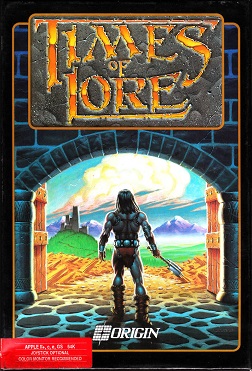
Below the Cut: Times of Lore (NES)

(Source: Wikipedia)
Times of Lore - Rating(7 RPP)
1) 1 - Character Advancement: practice/experience based advancement, stat or level increases, multiple classes or characters, customize characters
2) 1 - Combat: character stats used for combat, additional combat options, turn based
3) 0 - Items and Equipment: store to buy and sell, equipment decisions, item decisions
4) 3 - Story: main story at the forefront; world full of hints and lore; descriptions for objects, people, and places
5) 2 - Exploration: open world from the beginning, visited locations remain open
6) 1 - Quests and Puzzles: side quests not related to the main quest, puzzles and riddles to solve


Times of Lore held a special place in my heart. I remember playing it often as a kid, or at least watched it being played. I never got very far, in fact I'm not sure I ever completed any of the quests. So, why did I hold this game in such high esteem? Most likely nostalgia in combination with being an impressionable youth. I still have the desire to beat it; however, it falls into action-adventure more than an RPG, even with the extensive dialogue branches.

I'd always thought the game was an RPG, but after a series of events (CRPG Addict's assessment, playing the game before I started this blog, and reading a couple of reviews) I've come to the same conclusion as Chet: this game shouldn't be considered an RPG. Sure there are quests, and maybe even some puzzles (I didn't find any), but the combat is all action and there isn't any character advancement. This fact escaped my child-sized brain at the time, and I'd have put it alongside such classics as Ultima VII if asked just 15 years ago (heck it was even released by the same company).

With disillusioned memories I bid farewell to this game, and take it off my list of classic RPGs. One day I'll come back to conquer it, but it has lost its luster when I look at it now. To better times, and better games we go.

Wednesday, July 2, 2014

Below the Cut: King's Bounty (Genesis)

(Source: MobyGames)
King's Bounty - Rating(8 RPP)
1) 2 - Character Advancement: practice/experience based advancement, stat or level increases, multiple classes or characters, customize characters
2) 4 - Combat: character stats used for combat, additional combat options, turn based
3) 0 - Items and Equipment: store to buy and sell, equipment decisions, item decisions
4) 1 - Story: main story at the forefront; world full of hints and lore; descriptions for objects, people, and places
5) 1 - Exploration: open world from the beginning, visited locations remain open
6) 0 - Quests and Puzzles: side quests not related to the main quest, puzzles and riddles to solve

I can see why someone might favor this as an RPG. While it lacks full control over the hero, and there aren't really levels to gain, it offers progression as the player gains leadership points. Leadership determines how many of each unit the hero can lead. Up to five different units can make up an army. Different fantasy units are available from set locations on the map, and they range from dwarves to dragons, orcs to fairies, and so on. Combat has the player commanding these units in battle with wandering enemies or laying siege to castles. It's turn based; the enemy's turn follows after the player's units have finished with their actions. Some can fly across the map, others can fire volleys, and some sap the strength of the enemy for their own. Spells are available during combat to teleport units and damage the enemy.

The hero is chosen from four available options which vary the spell power, leadership, and starting gold. The quest is always the same: collect 25 map pieces to find the king's sceptre buried in a random location. Really it's all about finding that sceptre, and the map pieces only render that task easier to complete. While the full world isn't open from the beginning, it's remains open once unlocked. Unlocking the other continents happens after returning to the king with a set number of completed contracts to capture local evil lords. The main story is laid out in the beginning, but there's little lore. Gathering information only details the necessities: name of castle, name of lord, and estimated army strength.

What the game lacks is minor, and in examining it I nearly talked myself into playing through with a complete review. However, I'm going to stick with my gut and say this isn't an RPG. If you're interested, do check out CRPG Addict's take on the game for PC (there's not much difference between the two). It's a fun game for exploration, a slow build up of resources, and strategic combat. There aren't any side quests or puzzles to solve, and the whole story is laid out in the beginning instead of unfolding in a way to give the illusion of interactivity. Seeing as how Heroes of Might & Magic never really made it to console, this may be the last time we see a game in this genre.